
Barcode Types Explained
From EAN and UPC to Code 128, Data Matrix, and PDF417 — each symbology solves a different job.
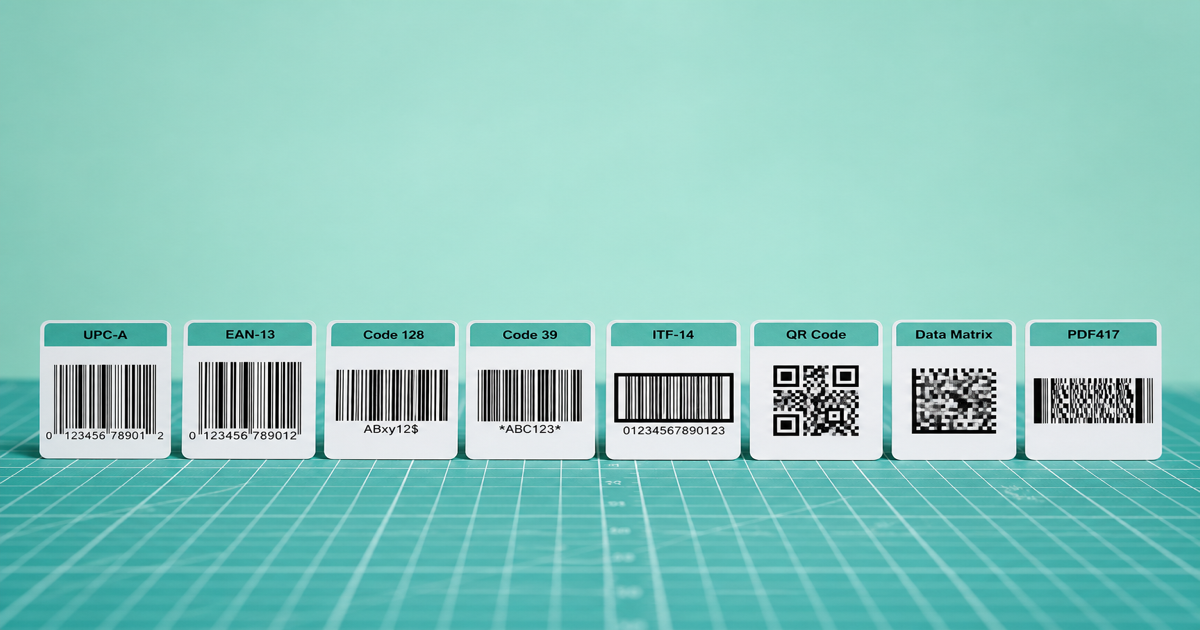
Barcode types—also called symbologies—define how bars, spaces, or matrix cells represent characters. EAN and UPC dominate retail checkout; Code 128 and ITF-14 serve logistics; Data Matrix marks small parts and healthcare units. Use the Barcode Generator to output each format, then verify reads in Barcode Scan.
Why it matters
Choosing the wrong symbology is expensive: artwork gets reprinted, scanners need replacing, and trading partners bounce shipments. Retailers mandate specific GTIN barcodes; hospitals expect GS1 Data Matrix on unit doses; warehouses standardize on Code 128 for variable-length IDs. A single cheat sheet of barcode types prevents teams from guessing based on what “looks familiar” on a competitor’s pack.
How to apply it
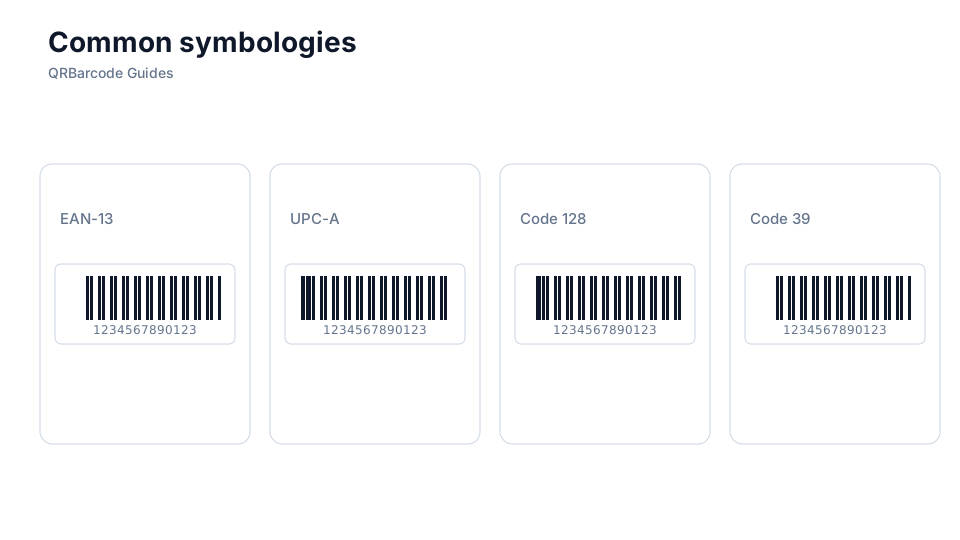
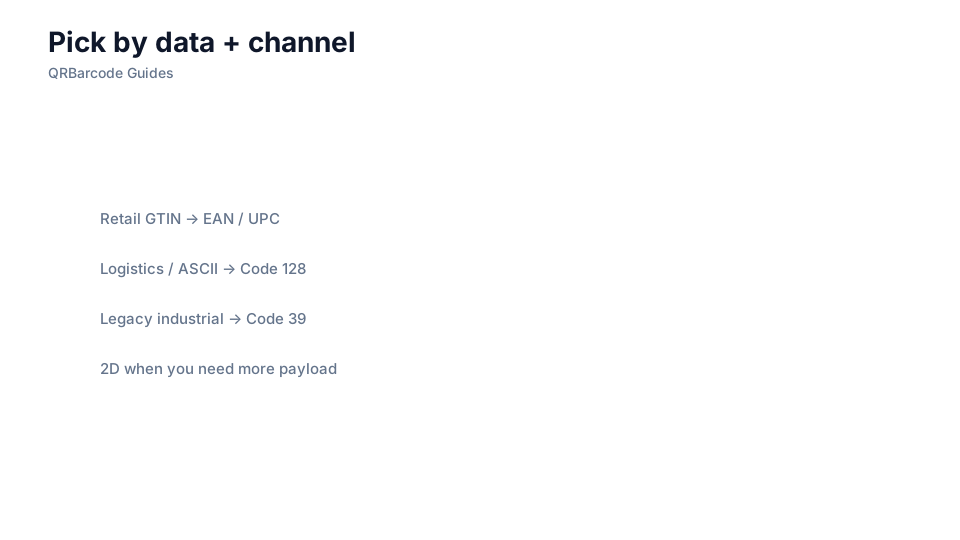
Map your workflow to a short list of allowed symbologies before design starts. If you sell through supermarkets, plan for EAN-13 or UPC-A. If you label cartons for distribution centers, add ITF-14 or Code 128. Compare retail versus logistics needs in EAN vs UPC and Code 128 vs Code 39.
- Document which symbologies each customer, marketplace, and internal system accepts.
- Generate separate artwork per level—item, inner pack, and shipper—rather than reusing one barcode everywhere.
- Keep human-readable text aligned with encoded data on GTIN symbols.
- Proof each symbology on the scanner model deployed in that environment (POS gun vs warehouse imager).
Common mistakes
A common mistake is using Code 128 on a retail facing label when the retailer expects a GTIN barcode—marketplace listings get delisted. Another is picking Code 39 for dense alphanumeric strings when Code 128 would fit the label; the wider symbol gets clipped or printed too small. Review Code 128 vs Code 39 before standardizing warehouse labels.
Recommended tools
Browse all symbologies from the Barcode Generator, including Code 128, Data Matrix, and PDF417. Use Barcode Scan to confirm mixed-format samples decode correctly.