
1D vs 2D Barcodes
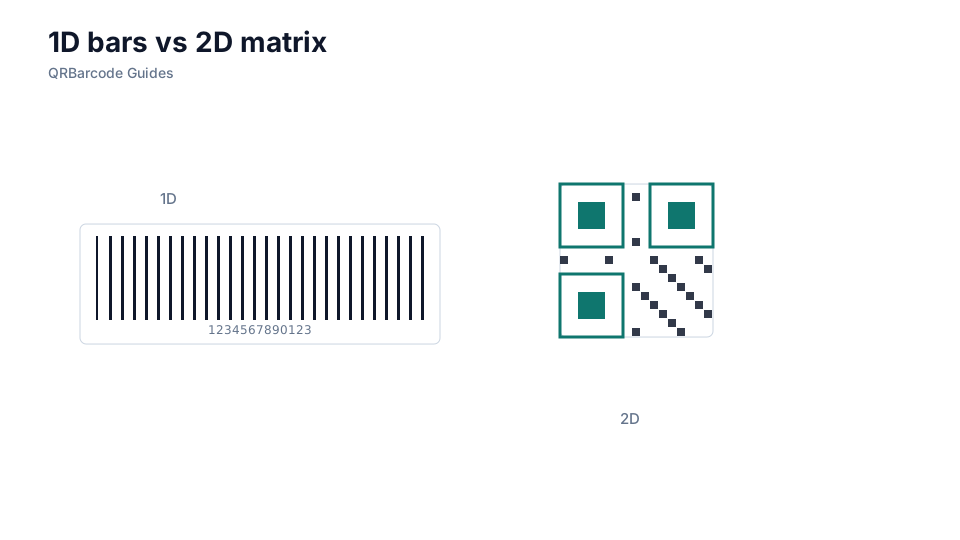
1D codes are stripes; 2D codes are matrices that store more data in less space.
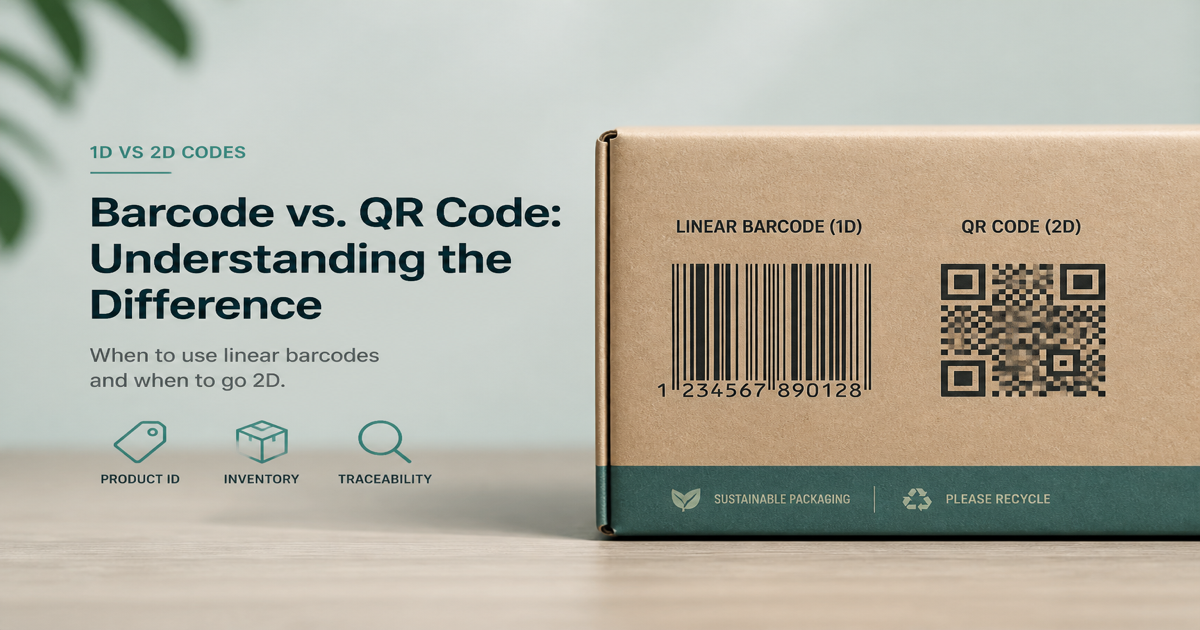
1D barcodes encode data in a single row of bars and spaces; 2D barcodes use a matrix of cells that can store far more information in the same area. Retail GTINs and simple SKUs usually stay 1D; serial tracking, medical device marking, and dense compliance labels move to 2D. Experiment in the Barcode Generator and test reads with Barcode Scan.
Why it matters
Dimensionality determines scanner hardware and print tolerances. Laser guns excel at 1D stripes across conveyor belts; imagers read both orientations of 2D symbols on curved vials or etched metal. Choosing 2D for a grocery checkout line that only has legacy lasers guarantees failure, while sticking to Code 128 on a part smaller than a dime wastes space you could fill with Data Matrix.
How to apply it
Start with the reader you already own. POS lanes and basic inventory guns expect EAN-13, UPC-A, or Code 128. Move to Data Matrix or PDF417 when you must embed serials, expiration dates, or regulatory attributes. Our primer on what a barcode is explains how scanners interpret each family.
- Inventory the scanner models and enabled symbologies at each site before redesigning labels.
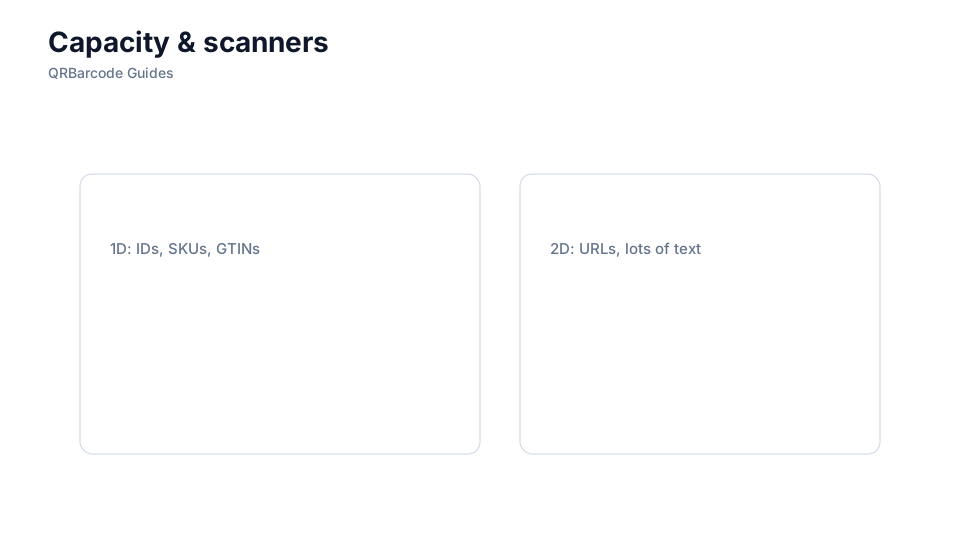
- Use 1D for short numeric IDs at checkout; use 2D when payload length exceeds practical 1D width.
- Increase contrast and module size on 2D direct-part marks—dot peen and laser etch need generous cell gaps.
- Train operators to align imagers over the full 2D symbol, not just one edge as with laser line guns.
Common mistakes
Teams slap a QR code on logistics labels because phones read them—yet fork-truck scanners cannot. Another mistake is shrinking Data Matrix until cells blur on inkjet prints. If marketing wants phone engagement and operations need WMS IDs, print two symbols with clear purposes rather than forcing one format to do both jobs.
Recommended tools
Compare 1D and 2D output in the Barcode Generator, generate Data Matrix for small parts, and verify in Barcode Scan. Read barcode types for a full symbology list.